
UK Employment Law Update 2026: The essential compliance guide for SMEs
What growing employers actually need to know (and do)
If 2025 felt like a year of “wait and see” when it came to employment law, you weren’t imagining it.
For much of the year, business owners were braced for radical reform - particularly around probation periods and “day one” employment rights. Now that the Government has confirmed what’s coming, we finally have clarity.
The good news? Some of the more extreme proposals have been softened.
The reality? April 2026 still marks the biggest shift in statutory employment rights in over a decade.
This guide cuts through the noise and focuses on what matters most for founders, directors and people-leaders in growing businesses.
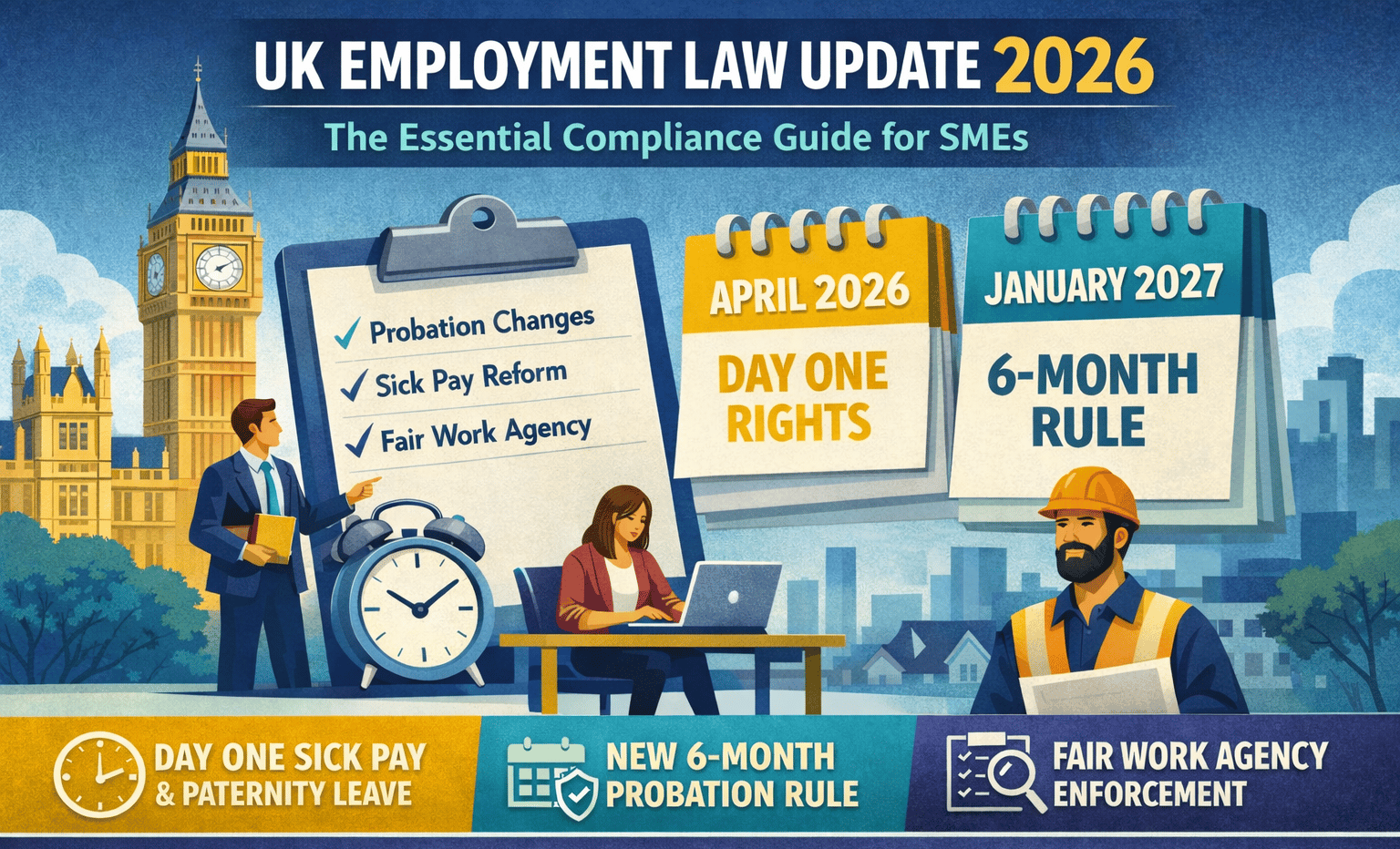
Key dates to have on your radar
April 2026
Statutory Sick Pay (SSP) becomes a day one right
Paternity Leave and Unpaid Parental Leave become day one rights
The Fair Work Agency launches
January 2027 (expected)
New six-month qualifying period for unfair dismissal comes into force
Probation periods: what’s changing - and why it matters now
After months of speculation, the Government has confirmed that the current two-year qualifying period for unfair dismissal will be reduced - but not removed entirely.
From January 2027, the qualifying period will drop to six months.
This means:
You will still be able to dismiss during the first six months without an unfair dismissal claim (provided the reason isn’t discriminatory or automatically unfair).
The long-standing “two-year safety net” many employers rely on will disappear.
Why this matters before the law changes
Here’s the critical (and often overlooked) point:
Employees hired in 2026 may fall into the new rules almost immediately when they come into force.
If the six-month rule is implemented on 1 January 2027:
Anyone who has already completed six months’ service by that date is likely to gain full unfair dismissal protection overnight.
What their contract originally said about “two years” is unlikely to matter.
For example:
An employee hired in July 2026 would reach six months by January 2027 - and gain protection immediately.
What smart employers are doing now
Treat probation as a real assessment period, not a formality
Build in structured reviews (particularly around Month 3 and Month 5)
Address concerns early, clearly, and in writing
Probation has always mattered - but from now on, how well you manage it could significantly reduce your legal risk.
Day one rights coming in April 2026
While unfair dismissal changes may wait until 2027, two major reforms are confirmed for 6 April 2026 and will require policy updates.
1. Statutory Sick Pay from day one
What’s changing
The three-day waiting period is removed
The Lower Earnings Limit is scrapped
Even the lowest earners will qualify for SSP
SSP will be payable from the first day of absence
What to do
Update sickness and absence policies
Check payroll systems are ready
Budget for a potential increase in short-term absence costs
2. Paternity & unpaid parental leave: no service requirement
What’s changing
The 26-week qualifying period is removed
Paternity Leave and Unpaid Parental Leave become day one rights
In practice, this means someone could qualify for paternity leave almost immediately after joining your business.
What to do
Review family-friendly policies and staff handbooks
Remove references to length-of-service eligibility
The Fair Work Agency: a shift in enforcement
From April 2026, a new Fair Work Agency will bring together enforcement powers that were previously fragmented.
While full enforcement powers are still being phased in, the direction of travel is clear:
greater scrutiny, less tolerance for error.
The agency will focus heavily on:
Holiday pay (particularly for irregular and zero-hours workers)
Statutory sick pay compliance
National Minimum Wage (including the new April 2026 rate of £12.71 for workers aged 21+)
Unlike the current system, enforcement may no longer rely on employees bringing tribunal claims - the agency will be able to inspect records and issue penalties directly.
Your practical compliance checklist
To stay ahead in Q1 and Q2 of 2026:
Update sickness policies to reflect day one SSP, remove references to “3 waiting days”
Review probation clauses and ensure reviews trigger before Month 6
Brief managers on performance management during probation
Audit holiday pay calculations for irregular hours and variable pay
Check payroll systems are ready for SSP changes
Final thought
The employers who struggle most with legal change aren’t usually the ones trying to cut corners - they’re the ones who leave people issues too late.
Clear expectations, structured probation, and confident people management aren’t just “nice to have” anymore. They’re becoming essential risk-management tools.
If you want help translating these changes into practical, people-first processes that work for your business, that’s exactly where I help.
Cath Patterson
People4Growth
As an experienced founder and HR Partner to SMEs, I’m excited to solve your hiring and people challenges - helping you attract, onboard and retain the talent you need.